CERN and Mistral AI are building a specialized model to help scientists make sense of billions of particle collisions.
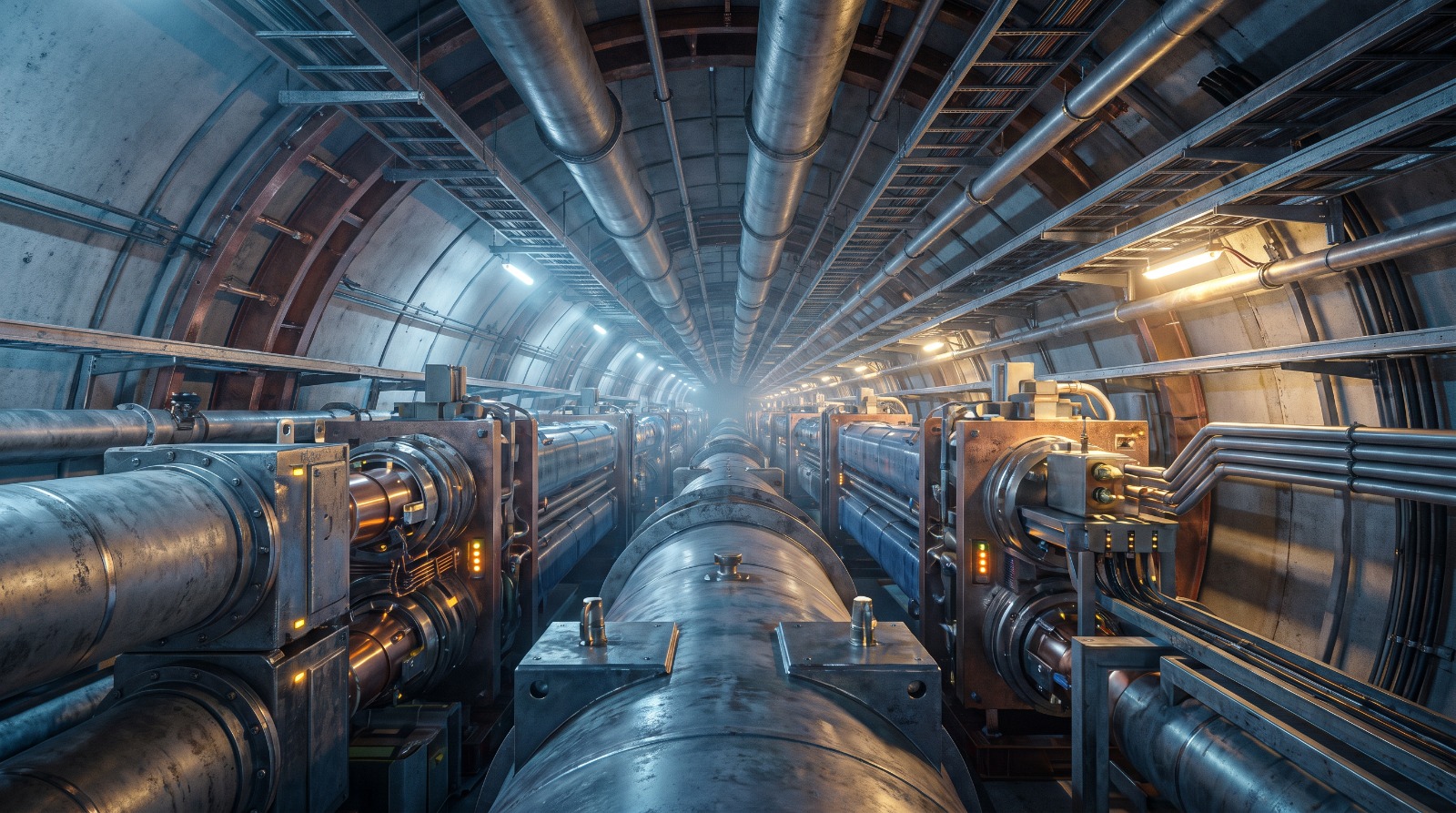
CERN, home to the Large Hadron Collider, generates staggering amounts of data every time particles collide. Interpreting it is far from simple: each collision produces complex signals that must be reconstructed and sorted through enormous datasets.
On October 15, 2026, CERN and Mistral AI announced a long term strategic alliance to develop an AI model specialized in particle physics, trained on billions of simulated proton collisions. CERN already stores close to an exabyte of experimental data, and that volume is expected to grow tenfold once the LHC's high luminosity upgrade arrives around 2030.
The model aims to help reconstruct collisions, identify particles, and flag unexpected signals worth deeper study, without replacing the scientific judgment needed to confirm any discovery. Both organizations believe the approach could eventually inspire tools for other research fields too.
- CERN and Mistral AI announced their alliance on October 15, 2026
- AI model trained on billions of simulated proton collisions
- CERN stores close to an exabyte of LHC data
- Collision volume expected to grow tenfold by around 2030
- AI assists analysis but doesn't replace scientific verification