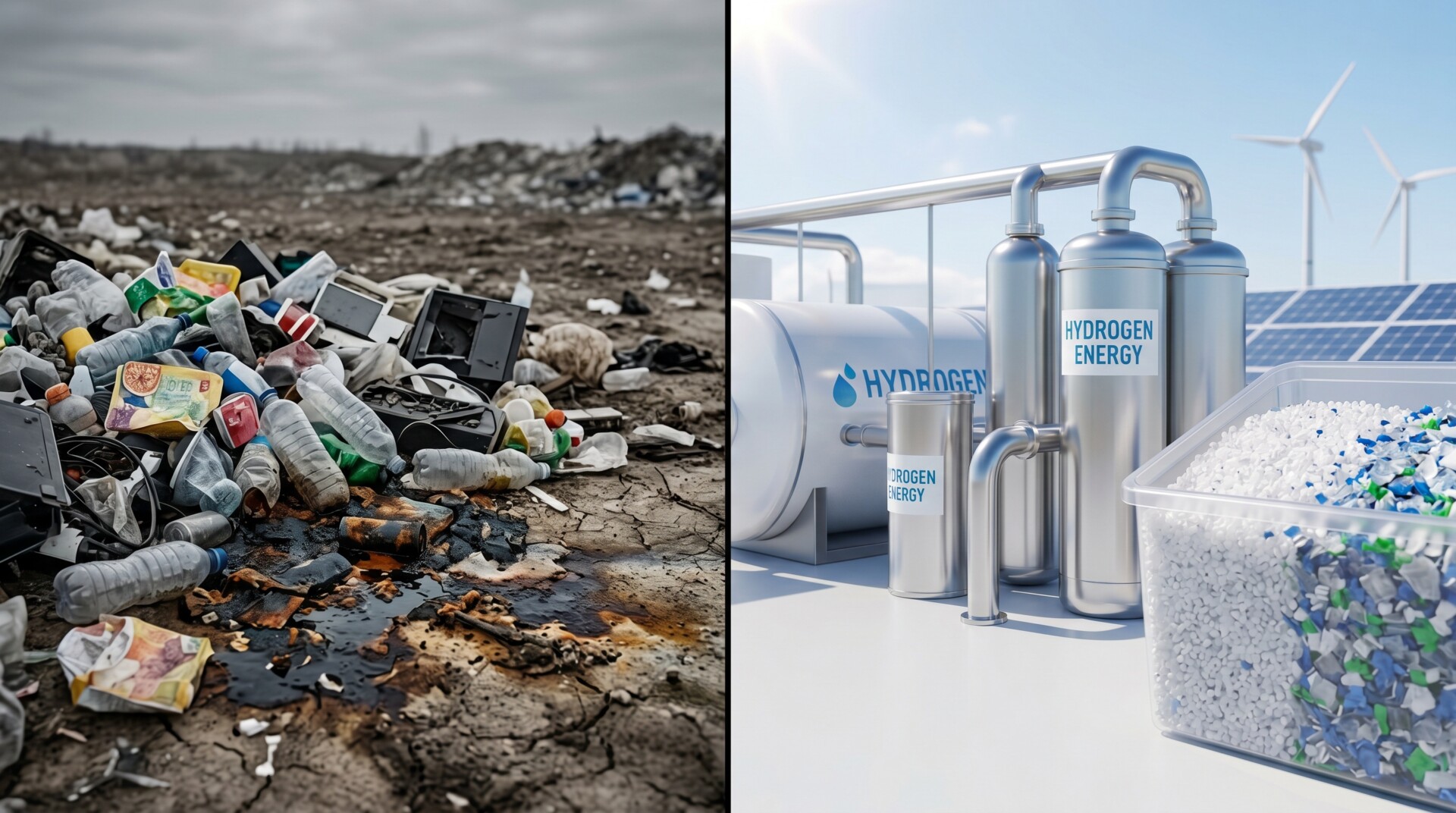
A Cambridge team found a way to turn two stubborn waste streams into one valuable clean energy source.
Plastic that resists recycling and acid from dead car batteries are two of the planet's most persistent waste problems. Researchers at the University of Cambridge decided to put them to work together instead of treating them separately. The result is a solar powered reactor that breaks down tough materials like plastic bottles, nylon textiles and polyurethane foam using recovered battery acid, then converts the byproducts into clean hydrogen and acetic acid, a compound with real industrial use.
The process starts with the acid breaking apart the plastic's chemical chains. A photocatalyst activated by sunlight then finishes the transformation. In lab testing, the reactor kept producing hydrogen efficiently for more than 260 hours without losing performance, a strong signal that this isn't just a one off lab trick.
What makes this story stand out is the logic behind it: instead of extracting more raw materials, the system uses what already exists as trash. The team is now working with Cambridge's technology transfer office to move the innovation beyond the lab. Engineering challenges remain before it reaches industrial scale, but the science behind it is already proven.
- Combines two waste problems: hard to recycle plastic and used battery acid
- Solar powered reactor produces clean hydrogen and acetic acid
- Sustained performance for over 260 hours in lab tests
- Developed at the University of Cambridge, now moving toward real world scale
- A circular model that turns pollution into opportunity